From cost to value: five ways to build a business case for sustainability that wins support



For sustainability professionals, securing support for an initiative often depends on showing clearly how it contributes to business priorities.
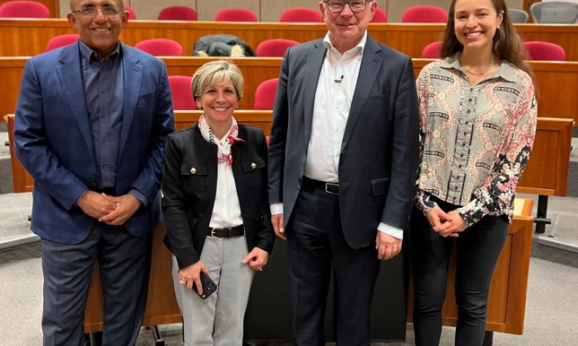
At the TfS Annual Workshop 2026, a poll among TfS members identified quantifying business value as their biggest challenge when bringing sustainability and business priorities together, followed by securing decision-maker support. These findings, and the discussion around them, point to a familiar problem: environmental outcomes may be compelling, but they still need to be framed as a business opportunity to build a credible case for investment.
Our speakers set out five ways to translate a sustainability challenge or opportunity into a clear and actionable business case.
- Translate Sustainability Outcomes into Financial Value
Energy, water, waste and raw material efficiency all have direct implications for the cost of doing business. Connecting environmental improvements to these financial impacts makes it easier for decision-makers to assess their value.
Carbon is increasingly part of the equation too. Understanding the emissions associated with purchased materials can help businesses consider how future carbon costs might affect sourcing decisions and profitability.
For procurement teams in particular, this adds a useful dimension when evaluating suppliers. Emissions performance can be considered alongside price, risk and resilience, giving businesses a fuller picture of the potential long-term cost of a purchasing decision.
- Understand the Cost of Inaction
A strong business case should examine what happens if an organisation decides to wait.
As carbon becomes an increasingly material business consideration, supplier emissions, product carbon footprints (PCFs) and sourcing exposure can help companies understand where future risks may arise. Better visibility can inform decisions before those risks translate into higher costs or reduced options.
The calculation will rarely be straightforward. A lower PCF, for example, does not necessarily mean a lower overall product cost, particularly where decarbonisation requires capital investment or changes to production processes.
This makes assumptions and trade-offs important. Decision-makers need to understand both the potential exposure and the basis on which it has been calculated.
- Use Data to Make a Credible Case
Reliable data can turn sustainability ambitions into proposals that finance, procurement and business leaders can properly assess. Supplier-specific PCFs, emissions forecasts, resource efficiency metrics and quantified savings all help establish the scale of an opportunity or risk.
But precision has to be proportionate to the decision being made. Endless refinement of forecasts can delay action without materially improving the business decision. In some circumstances, a credible range supported by transparent assumptions will provide enough information to decide what happens next.
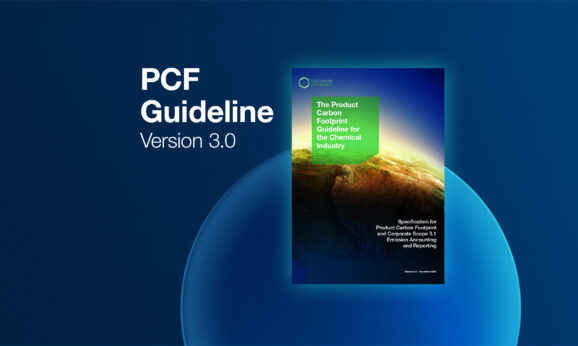
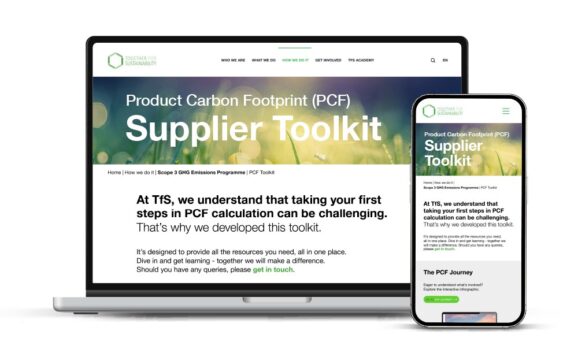
The quality and consistency of the underlying data remain important. The TfS PCF Guideline provides a methodology tailored to the particular complexities of chemical products, while TfS’ PCF Exchange Solution enables companies and suppliers to share PCF information efficiently and securely.
- Find the Value for Customers
Sustainability can also support the commercial case for a product or service. One useful way to assess this is to consider its “handprint” alongside its footprint.
While the footprint captures the environmental impact associated with a product, the handprint considers the possible improvements that product can help a customer achieve, such as reducing energy, water, raw material or chemical consumption. The handprint framework identifies these measurable improvements as an important way to connect sustainability with commercial growth.
Understanding these downstream benefits can change the value proposition. It can reveal opportunities to develop products and solutions around customer needs, deepen commercial relationships and demonstrate benefits that extend beyond the characteristics of the product itself.
For suppliers, that creates an opportunity to make sustainability part of the conversation around customer value.
- Involve the Decision-Makers
Sustainability initiatives frequently cut across organisational boundaries, which means the value they create may be distributed across several functions.
Procurement understands sourcing and suppliers; finance can test the economics of an investment; commercial brings insight into customers and growth opportunities; and operations focuses on implementation.
Sustainability teams can help connect these varying perspectives and establish how the proposal supports wider priorities.
Early involvement matters because the team being asked to invest may not receive all the benefits. A shared understanding of costs, value and trade-offs can help build confidence in the proposal and avoid problems emerging late in the decision-making process.
Building a Stronger Business Case
Together, these questions provide a practical way to test whether a sustainability proposal is ready to be put in front of business leaders. They also help teams identify gaps in the case before seeking investment.
With sustainability increasingly connected to sourcing, operational efficiency, risk and customer expectations, making these connections clear can help businesses decide where action will deliver the greatest value.