


TfS China Workstream 5 Hosts Technical Workshop


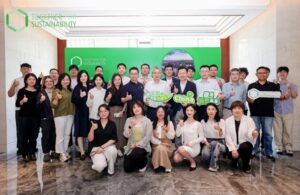
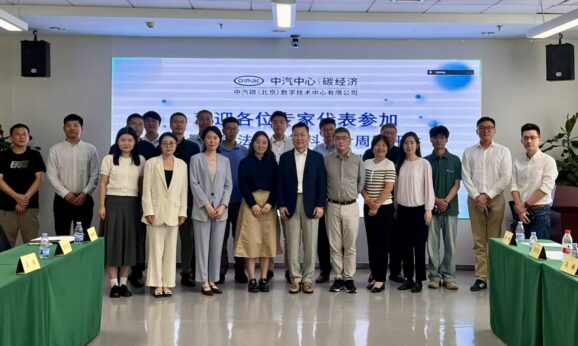
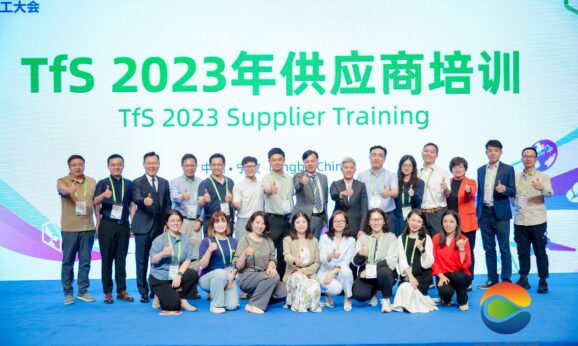
On June 26, 2026, the TfS China Workstream 5 (Scope 3 GHG emissions) successfully hosted a technical workshop. The workshop focused on topics such as China’s “Dual Carbon” policies in the chemical industry and Scope 3 carbon management and accounting methodologies. Representatives from TfS member companies, industry organisations, and professional service firms were invited to share practical experiences and research findings, and explore practical pathways toward the industry’s low-carbon transition and sustainable development.
At the start, Jason Guan, Chair in Duty of TfS China and Head of Raw Material Global Category Management Asia for BASF, delivered opening remarks and provided an update on TfS China’s recent progress. Subsequently, Hugh Hu, Chair of TfS China Workstream 5 and Global AI Procurement Team Lead in China at Syngenta, presided over the TfS China WS5 monthly meeting, where he exchanged views with participants on recent key initiatives and future development directions. A representative from TfS member company AkzoNobel shared the company’s practices for supplier engagement in Scope 3 decarbonisation. Experts from China Automotive Carbon (Beijing) Digital Technology Center shared relevant research findings and insights on topics such as the mass balance methodology and responsible procurement.
During the keynote session, Pang Guanglian, Executive Board Member and Vice Secretary General of China Petroleum and Chemical Industry Federation (CPCIF) and Secretary General of Committee of Multinationals of CPCIF highlighted that during the 15th FYP, policy will shift comprehensively from energy consumption to carbon emissions dual-control, with the national carbon market expanding to cover the petrochemical and chemical sectors. He emphasised that policy is actively driving the transition from fossil fuels to renewable energy. Green procurement will transition from optional to compliance requirement. While companies face rising retrofit costs, rapid technology change, and tightening regulation, significant opportunities remain in product premiumisation, new energy materials, and green premium capture – only those who proactively transition will secure a competitive advantage.
Experts from FORWARD ECO, CIRS Group, and CQM Group, respectively shared their professional insights and practical experience on China’s carbon market development, the application of life cycle assessment (LCA) methodology, and the certification and verification landscape in China.
This workshop further promoted communication and cooperation between TfS member companies and upstream and downstream partners in the value chain regarding the management of Scope 3 greenhouse gas (GHG) emissions, providing valuable insights for improving carbon management systems and building supply chain decarbonisation capabilities. Moving forward, TfS will continue to leverage its platform’s synergistic role to encourage member companies and industry partners to strengthen practical exchanges and experience sharing, in support of the chemical industry’s low-carbon transition and sustainable development.
In his closing remarks, Jason Guan noted: “Addressing Scope 3 GHG emissions is a critical issue for companies advancing sustainable procurement, requiring all supply chain stakeholders to continuously improve their data infrastructure, accounting methods, and management mechanisms. TfS will continue to refine the Scope 3 accounting standards system and industry collaboration framework to help the chemical industry deepen its understanding, broaden its perspectives, and translate the outcomes of these exchanges into more actionable plans.”