


Why navigating PACT–TfS PCF differences just became more practical for the chemical sector


Scope 3
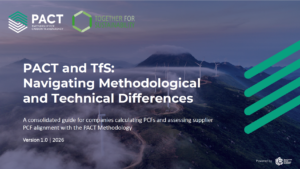
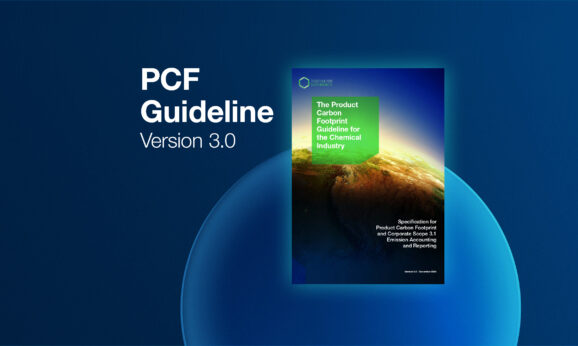
Partnership for Carbon Transparency (PACT) and Together for Sustainability (TfS) are launching a new joint guide to help companies, including those in the chemical sector, confidently navigate differences between PACT and TfS methodologies for Product Carbon Footprint (PCF) calculation and exchange.
For chemical companies, exchanging PCF data across complex, multi-tier supply chains is essential—but not always straightforward. Differences in methodologies can create uncertainty, slow down procurement decisions, and reduce trust in emissions data.
PACT and TfS have worked closely to align their approaches since 2021. Today, the two methodologies are largely compatible. Where differences remain, they are limited, well understood, and manageable with the right guidance.
This guide directly addresses those challenges with clear, practical guidance tailored to real-world use cases in the chemical industry.
Built for practical use in procurement and supply chains
“Navigating Methodological and Technical Differences between PACT and TfS” is designed for the key actors in PCF exchange:
- PCF builders: Practitioners using the TfS methodology who want to ensure their PCF is consistent with the PACT methodology. They can clearly see where alignment with PACT is required and what actions to take
- PCF recipients: Stakeholders receiving a PCF that follows the TfS methodology—typically procurement and sustainability teams—gain concrete questions, checks, and formulas to assess supplier data with confidence, ensuring it can be used further following the PACT methodology.
The guide covers key topics such as calculation choices, data integrity, verification, and data models. It translates differences into practical solutions: conversion formulas, thresholds, and supplier engagement questions that can be readily applied.
Why this matters now
Scope 3 GHG emissions reporting is becoming a core requirement for many companies, and PCFs are a critical input. As expectations increase, companies need data they can trust, compare, use—and processes that work at scale.
This joint guide helps reduce ambiguity and enables faster, more consistent PCF exchange, comparison, use, across value chains, supporting both decarbonisation targets and day-to-day procurement decisions.
Two complementary approaches, one shared goal
PACT and TfS bring complementary strengths to PCF exchange:
- PACT provides a cross-industry framework for consistent PCF calculation and exchange
- TfS focuses on sector-specific requirements, providing operational guidance for the chemical industry
Together, they support companies in building reliable, decision-ready carbon data across supply chains—without unnecessary complexity.
The remaining differences between the two approaches are known and manageable. This guide shows exactly how to deal with them in practice.